Italian sayings: the proverbs Italians actually use
Italian sayings: the proverbs Italians actually use
Italian is full of proverbs. You hear them in a bar, in a kitchen, at the end of an argument, and on the television when something has gone wrong. They are short and old, and they carry a lot of meaning in very few words. One proverb can close a discussion that three paragraphs could not.
This is a list of forty that Italians still say, and I have left out the ones that live only in dictionaries or in American films about Naples. For each one I have told you what it means and when you can use it without sounding like a textbook.
What is an Italian proverb? (Proverbi e detti)
A proverbio is a complete piece of folk wisdom that has been passed down for centuries. A detto is shorter, closer to a saying, and a modo di dire is an idiom whose meaning has nothing to do with the words inside it. Italians do not always keep the three apart in conversation, and you do not need to either. Most of the sayings below have a rhythm, many of them rhyme, and all of them sound better when you say them slowly.
Italian proverbs about life
Chi dorme non piglia pesci. (He who sleeps catches no fish)
It means that if you sit still, the opportunity goes to someone else. Parents say it to teenagers, coaches say it to players, and it appears whenever somebody has been slow to move. The English equivalent is “you snooze, you lose”, which is just as blunt.
Chi va piano va sano e va lontano. (Who goes slowly goes safely, and goes far)
This is advice about pace, and Italians use it for everything from study to business. It is an argument against rushing, and it usually arrives when someone is trying to fit a year of work into a month.
Meglio tardi che mai. (Better late than never)
Short, common and literal. You say it to someone who has arrived late and is apologising, and you say it to yourself when you finally get round to something. It turns a reproach into a shrug.
Non tutte le ciambelle riescono col buco. (Not all donuts come out with a hole)
A ciambella is a ring-shaped cake, and the joke is that sometimes it comes out of the oven without the hole in the middle. Italians use it when a plan works out imperfectly, or when a person turns out to be less than perfect. It is a kind way of saying that nothing has to be perfect.
Tra il dire e il fare c’è di mezzo il mare. (Between saying and doing there is a sea)
The English “easier said than done” means the same thing, but the Italian puts an ocean in the middle of it. You hear it when somebody has promised something big and everyone at the table already knows how the story ends.
Tutto passa. (Everything passes)
Three words, and one of the most used sayings in the language. Italians say it about bad moods, bad luck, bad weeks and bad governments. If you learn one phrase from this page to say to an Italian who is having a hard time, make it this one.
Il mattino ha l’oro in bocca. (The morning has gold in its mouth)
The early hours are the ones worth having. It is the Italian cousin of “the early bird catches the worm”, and it is what you hear from people who get up at five and cannot understand why nobody else does.
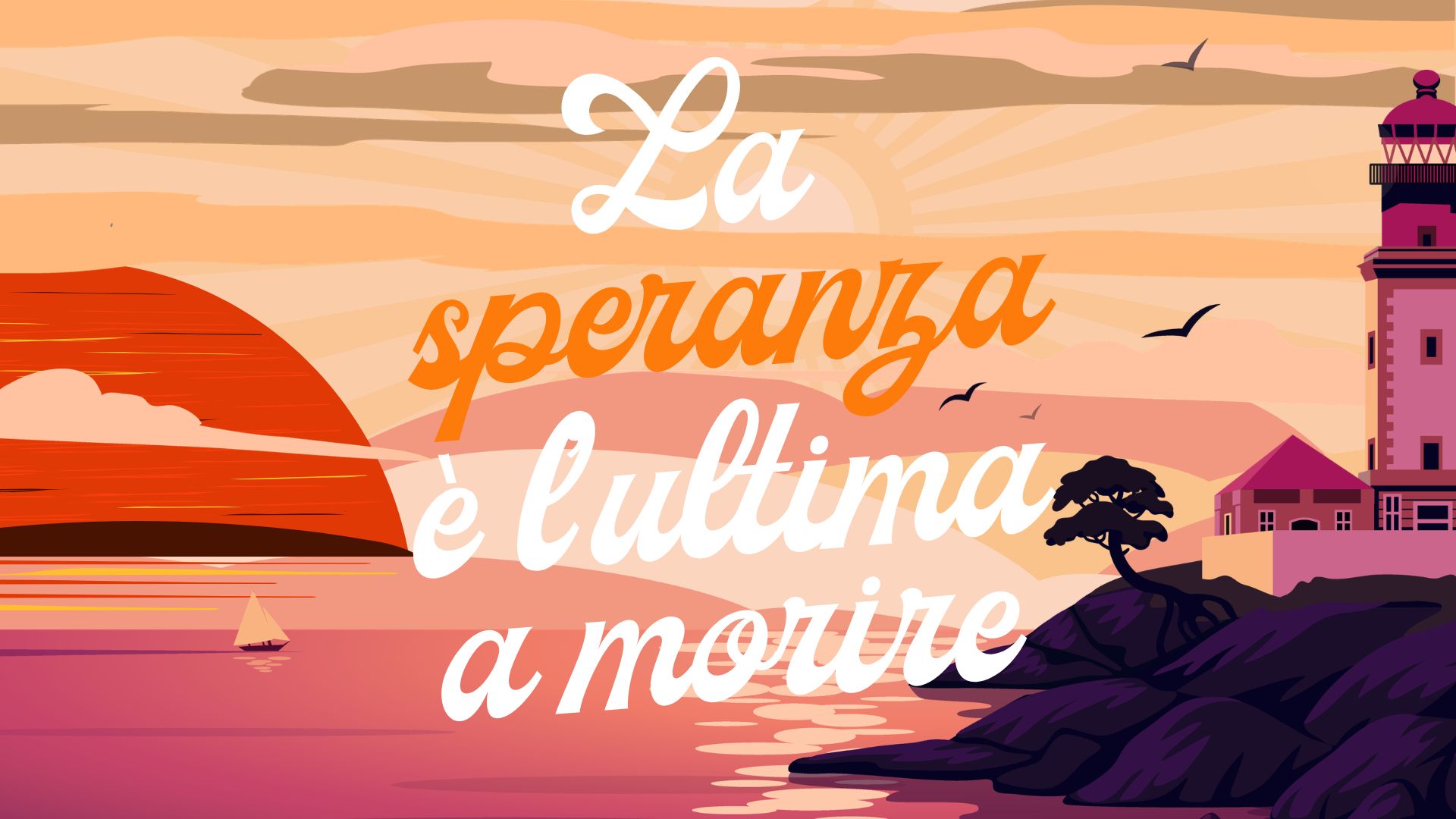
La speranza è l’ultima a morire. (Hope is the last to die)
Hope is the last thing to go. It sounds dramatic in English and it is an ordinary thing to say in Italian. People say it about a football team, a job interview, a delayed train, and it is what you reach for when you are hoping for something you have already been refused once.
Chi la fa l’aspetti. (Whoever does it should expect it)
This is “what goes around comes around”, with a warning inside it. It is usually said after somebody has treated another person badly and the bad treatment comes back. Do not say it to the person who was hurt. Say it to the person who did the hurting.
Non è tutto oro quel che luccica. (Not all that glitters is gold)
The same proverb exists in English almost word for word. Italians use it about a house that photographs well, a job offer, a person who is charming on the first evening.
Chi non risica non rosica. (Whoever does not risk, does not nibble)
If you never take a chance, you never get anything. Rosicare means to gnaw or to nibble, and the image is a mouse that eats only what it dares to go and take. The English equivalent is “nothing ventured, nothing gained”, and it is what a friend says when you are hesitating over something that frightens you a little.
Italian proverbs about love
L’amore è cieco. (Love is blind)
Short, old and everywhere. Italians use it about a friend who has fallen for the wrong person, and about themselves with a certain amount of pride.
Chi trova un amico trova un tesoro. (Whoever finds a friend finds a treasure)
This is one of the most quoted proverbs in Italy, and it is about friendship rather than romance. It gets said at weddings, in toasts, and on the kind of evening when a group of friends has been at the same table for four hours.
Lontano dagli occhi, lontano dal cuore. (Far from the eyes, far from the heart)
Out of sight, out of mind. Italians say it with a little sadness, because it is usually about somebody who moved to another city or another country, and about how feelings fade when the person is not in front of you.
Amore e tosse non si possono nascondere. (Love and a cough cannot be hidden)
Two things you cannot hide: the fact that you are coughing, and the fact that you are in love. It is a warm proverb, and it is often said about somebody whose face has already given them away.
Moglie e buoi dei paesi tuoi. (A wife and oxen from your own villages)
Old, rural and still quoted. It is advice to marry somebody from your own area, because you will share the same habits and the same way of settling an argument. Nobody follows it any more, which is precisely why people enjoy saying it.
L’amore non è bello se non è litigarello. (Love is not lovely if it is not a little quarrelsome)
A litigarello is a small, harmless argument, and the proverb says that a relationship with no friction in it is not quite alive. It is usually said after a couple has had a loud five minutes and made up.
Tra moglie e marito non mettere il dito. (Between a wife and a husband, do not put your finger)
Stay out of other people’s marriages. The image is of a finger caught in a door that was about to close, and it is a warning as much as advice. Italians use it for couples who are not married too.
Chi si somiglia si piglia. (Those who resemble each other take each other)
People end up with people like themselves. Italians say it about a couple who have started dressing alike, finishing each other’s sentences, or arguing in the same way.
Italian proverbs about food and family
Meglio un uovo oggi che una gallina domani. (Better an egg today than a hen tomorrow)
Take the small certain thing now instead of the bigger thing you might get later. The English equivalent is “a bird in the hand is worth two in the bush”, and the Italian example is something you can eat.
A caval donato non si guarda in bocca. (You do not look in the mouth of a gifted horse)
You do not inspect a gift for faults. Italians use it about presents, favours and opportunities, and it is the polite thing to say when somebody apologises for the quality of what they have given you.
L’appetito vien mangiando. (Appetite comes while you are eating)
You start eating and then you get hungry. Italians use it far beyond food, for study, for exercise, for a job they were not sure about. It is what you say to somebody who is waiting to feel ready.
A tavola non si invecchia. (At the table, you do not grow old)
Time spent at the table does not count. Lunch that starts at one and ends at four is not a long lunch, it is a normal one, and this proverb is the reason nobody at that table is in a hurry.
Non si può avere la botte piena e la moglie ubriaca. (You cannot have the barrel full and the wife drunk)
You cannot have everything. The image is a man who wants both his wine and his wife, and the proverb is used, cheerfully, about anyone who wants two things that cancel each other out. It is a little rude and very common.
La mamma dei cretini è sempre incinta. (The mother of idiots is always pregnant)
There is no shortage of fools. It is not a kind proverb, and Italians use it with a smile when yet another person has done something spectacularly stupid. Do not write it in a card.
Figli piccoli, guai piccoli; figli grandi, guai grandi. (Small children, small troubles; big children, big troubles)
Parents say this to each other, usually while the children are still small and the parents believe the hard part is ahead of them. The worries never stop, they only get more expensive.
Le bugie hanno le gambe corte. (Lies have short legs)
A lie does not get far. It is the proverb parents use on children, and it turns out to be true about grown-ups too.
Italian sayings and idioms for everyday moments
In bocca al lupo. (Into the wolf’s mouth)
This is how Italians say good luck, and it is used before an exam, an interview, a performance, a driving test. The traditional reply is Crepi il lupo, may the wolf die. Do not answer grazie, because wishing somebody luck out loud is considered bad luck in Italy, and this proverb is a way of saying it without saying it.
Essere al verde. (To be at the green)
To have no money at all. The image is the bottom of a candle, or the green baize at the bottom of an empty purse, and nobody agrees which one it is. What matters is that sono al verde means “I am broke”, and it is said without embarrassment.
Prendere due piccioni con una fava. (To catch two pigeons with one bean)
To kill two birds with one stone. A fava is a broad bean, used as bait, and this is one of the most used sayings in the language.
Avere le mani in pasta. (To have your hands in the dough)
To be involved in something, usually several things at once. It can be a compliment, about somebody who gets things done, or a suspicion, about somebody who is everywhere they should not be. Which one it is depends on who is talking.
Acqua in bocca. (Water in the mouth)
Keep it quiet. It is what you say to somebody after telling them a secret, and it is one of the few sayings that works perfectly as an instruction.
Essere come il cacio sui maccheroni. (To be like cheese on macaroni)
To arrive at the perfect moment. Cheese on pasta is what makes the dish, and the proverb is used about a person, a phone call or a piece of news that turned up at the right time.
Avere la testa fra le nuvole. (To have your head in the clouds)
To be distracted, dreamy, not quite present. It is said about children, about people in love, and about anyone who has just walked past you without saying hello.
Essere al settimo cielo. (To be in the seventh heaven)
To be happier than you can say. Seven is the number of heavens in the old cosmology, and the phrase is used for good news, for a new relationship, for a holiday that has just begun.
Fare il passo più lungo della gamba. (To take a step longer than your leg)
To take on more than you can handle. It is about a mortgage that is too big, a project with no team, a promise you cannot keep. The image is exact and the proverb is unforgiving.
Chiudere un occhio. (To close one eye)
To look the other way. It is what a teacher does about late homework, what a police officer does about a scooter on the pavement, and what a friend does about something small.
Costa un occhio della testa. (It costs an eye of the head)
It costs a fortune. The English says an arm and a leg, the Italian says an eye, and the proverb is used for rent in Milan, for a taxi at night, and for anything sold in a shop near a famous monument.
A buon intenditor poche parole. (To a good listener, few words)
A word to the wise. Italians use it when the point has been made without being spelled out, and it is a polite way of saying that the rest is understood.
Cane che abbaia non morde. (A dog that barks does not bite)
The people who shout the loudest are usually the least dangerous. It is said about a colleague who threatens, a driver who honks, and anyone who makes a lot of noise without doing anything.
Italian sayings for a tattoo
Italians are always a little surprised by how many people want an Italian proverb tattooed on them, and a little more surprised by which ones they choose. A few of the sayings above work beautifully on skin. A few do not, and it is worth knowing why before you sit in the chair.
The ones that work are short, they stand on their own, and they mean something you would be happy to explain for the next thirty years.
- Tutto passa (Everything passes). 11 characters. The best of the lot for a tattoo. Short, calm and true.
- L’amore è cieco (Love is blind). 15 characters. Short and warm, and it needs no explanation.
- Meglio tardi che mai (Better late than never). 20 characters. Gentle, forgiving, easy to read at a glance.
- La speranza è l’ultima a morire (Hope is the last to die). 31 characters. Long, but it fits along a forearm or a collarbone.
- Non è tutto oro quel che luccica (Not all that glitters is gold). 32 characters. A good one if you want something that sounds like a warning.
- Chi va piano va sano e va lontano (Who goes slowly goes safely, and goes far). 33 characters. The most quoted saying on this page, and the one people most often get wrong by leaving out the middle.
- Chi trova un amico trova un tesoro (Whoever finds a friend finds a treasure). 34 characters. Long, and better across a shoulder blade than down an arm.
And the ones to leave alone. La mamma dei cretini è sempre incinta (The mother of idiots is always pregnant) is funny at a dinner table and a strange thing to carry for life. Non si può avere la botte piena e la moglie ubriaca (You cannot have the barrel full and the wife drunk) is twice as long as any tattoo should be and mentions a drunk wife. Cane che abbaia non morde (A dog that barks does not bite) sounds like an insult aimed at whoever is reading it. And if a design is missing an accent, or the apostrophe is in the wrong place, an Italian will notice it before they read the words.
If you are choosing between two, ask a native speaker first. Not for the translation, which is usually fine, but for the feeling of the phrase. Some of these sound like wisdom, some sound like a grandmother, and only an Italian can tell you which one you are about to wear.
Want a Hand?
Proverbs are the part of Italian that no grammar book gives you. You can learn the words on this page in an evening. The moment when you use one at the right table, with the right tone, is the moment you start sounding like yourself in Italian instead of like a student.
That is the part a teacher is for. Bring one saying from this list to a lesson and use it in a sentence about your own week, and you will remember it for good.
Book a free trial lesson, or meet our teachers and see who fits the way you want to learn.