Italian Mafia Movies, ranked by an Italian teacher
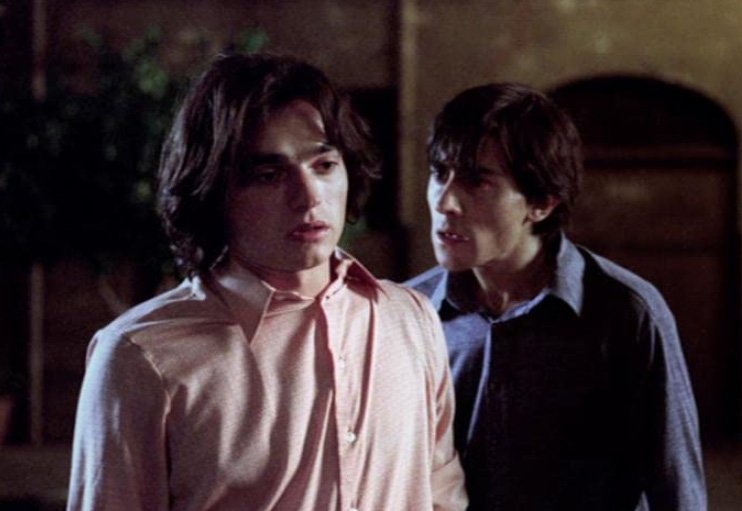
Italian Mafia Movies, ranked by an Italian teacher
Search the internet for the best Italian mafia movies and you will get The Godfather, Goodfellas and Scarface. These films can give a distorted picture of what the mafia actually is. Many famous films romanticize the mafia: they take the point of view of the mafiosi, turn them into the heroes of the story, paint them as men of honour, and follow their adventures of grabbing power, through gripping challenges, admirable successes and ruinous falls.
The reality is very different: there is nothing beautiful about the mafia. The mafia is a cancer on Italian society, organized crime responsible for countless acts of violence against innocent people as well, extortion, terrorism, collusion with politics and, in the end, a negative impact on the lives of ordinary people.
In this article I am going to give you a list of Italian mafia movies filmed in Italy. In the strict sense, the word “mafia” refers to a criminal organization that originated in Sicily. Over time, though, the word has stretched to cover several kinds of criminal organizations in territories beyond Sicily. That is why I have decided to include in this list also films set around Naples or in Rome, whose stories revolve around mafia-type phenomena similar to the mafia that originated in Sicily.
I am a native Italian teacher, and I have added a note on the language level of each film. If you are not familiar with CEFR levels, remember that “A1 to A2” is for beginner students, “B1 to B2” for intermediate, and “C1 to C2” for advanced.
1. I cento passi (One Hundred Steps) (2000)
Outspoken, Over-the-top, Biographical crime drama. Directed by Marco Tullio Giordana.
The true story of Peppino Impastato, told in Cinisi, near Palermo, where his family’s house stood one hundred steps from the home of the local Mafia boss, his own uncle. When the boss is killed by a car bomb, the boy’s world breaks, and as an adult he chooses the side you would not expect from a Mafia family: he joins the Communist Party and founds a pirate radio station, Radio Aut, where he names the boss on air and mocks him with jokes. He was killed in 1978, on the day Aldo Moro’s body was found, and the boss who ordered it was only convicted twenty-four years later. Variety’s review picked out his “outrageously outspoken, over-the-top” character, and the film runs on that voice: arguments, jokes, radio monologues, a family at war with itself.
Level: B2 to C1. Giordana cast only Sicilian actors, so the dialogue carries a Sicilian musicality over fundamentally standard Italian.
2. La mafia uccide solo d’estate (The Mafia Kills Only in Summer) (2013)
Heartrending, Humorous, Comedy drama. Directed by Pif.
A boy named Arturo grows up in Palermo in the 1970s, in love with a girl named Flora since he was ten, while the adults around him insist that the Mafia does not exist. Slowly, he and his whole city stop being able to say that. The film follows him from childhood to the years of the massacres, and it closes as a homage to the policemen and magistrates who fought Cosa Nostra in those decades, Falcone and Borsellino above all. Pif, a journalist, made this his directing debut, and he narrates it himself in a clean, unhurried voice. Variety called it “alternately humorous and heartrending”, which is exactly the ride: the laughs come first, and then the same events stop being funny.
Level: B1 to B2. The voiceover does the heavy lifting in clear Italian.
3. Il Divo (2008)
Compelling, Flashy, Political thriller. Directed by Paolo Sorrentino.
Giulio Andreotti, seven times Prime Minister of Italy, in the years of his seventh election, his failed bid for the presidency, the Tangentopoli scandal and his trial. Around him, a montage of the dead: a journalist, a general, two bankers, a former Prime Minister, all connected to him by allegation. Toni Servillo plays him as a small, hunched, unkillable man, and the film won the Jury Prize at Cannes. Rotten Tomatoes’ consensus calls it “this Italian political thriller” whose “visuals and the intrigue are compelling and thrilling in equal measure”, and it is the same consensus that warns the dialogue “can be hard for a non-native to follow”. That is the honest description of a film that speaks in rapid, ironic, intensely bureaucratic Roman-accented Italian, full of political jargon. A joy for advanced learners, impenetrable before it.
Level: B2 to C1. Dense political dialogue at speed, not a dialect problem.
4. Il traditore (The Traitor) (2019)
Mesmerizing, Fact-based, Crime thriller. Directed by Marco Bellocchio.
Tommaso Buscetta, the “boss of two worlds”, sees the war between Cosa Nostra clans coming and moves his life to Brazil. It does not save the people he loves: two of his sons and his brother are killed in the feud. Captured and extradited, he makes the choice that made history, collaborating with judge Giovanni Falcone and becoming the first major Cosa Nostra boss to turn state witness. His testimony made the 1986 Maxi-Trial possible, 475 defendants in a bunker-courtroom in Palermo. The film competed for the Palme d’Or at Cannes, and the Harvard Crimson called it “a mesmerizing story of crime and betrayal”. The courtroom scenes carry their own lesson: one state witness, Totuccio Contorno, speaks in his native Sicilian dialect to the dismay of court officials who cannot understand him, and the film lets you hear exactly what register-switching sounds like.
Level: B2 to C1. Sicilian against formal courtroom Italian.
5. Il giorno della civetta (The Day of the Owl) (1968)
Tense, Skillfully-made, Crime drama. Directed by Damiano Damiani.
A truck driver is shot while delivering cement in a small Sicilian town, and the murder has a witness: the wife of a man who then disappears. A carabinieri captain, recently transferred from the North, refuses to accept that nobody saw anything. He jails witnesses, ignores the advice of the people who know the town better, and keeps asking the questions nobody wants to answer. It is from Leonardo Sciascia’s novel, with Claudia Cardinale and Franco Nero, and it won three David di Donatello awards. Variety’s 1968 review praised it as “a skillfully-made, well-acted picture blending social satire, dramatic intensity and comic localisms”, and the localisms are the point: a town where everyone saw nothing, and one outsider who asks too many questions.
Level: B2 to C1. Mostly standard Italian with light Sicilian colouring.
6. Romanzo criminale (Romanzo Criminale) (2005)
Epic, Brutally handsome, Crime drama. Directed by Michele Placido.
Rome, the 1970s: three friends from the same neighbourhood, Libanese, Dandi and Freddo, build a gang on the model of the real Banda della Magliana, from Giancarlo De Cataldo’s novel. They kidnap a baron, and when the kidnapping goes wrong they keep the three-billion-lire ransom anyway, invest it in drugs, and start buying their way into the city’s underworld. A police commissioner records the ransom’s serial numbers and hunts them for years. The Guardian called it “the epic, bloody tale of smalltown thugs”, epic in length as well as scale, and the film earns the word: it covers a decade of deals, betrayals and funerals. This is where the Roman dialect enters the list at full strength, and reviewers note the dialogue asks something of non-Italian viewers. The Sky series that came later is a different animal; this is the 2005 film.
Level: B2 to C1. Heavy Roman dialect, with the narration in standard Italian.
7. Suburra (2015)
Brash, Brutal, Neo-noir. Directed by Stefano Sollima.
Rome, 2011. A member of parliament is pushing a bill that would turn the Ostia seafront into a Las Vegas-style project, financed through the Vatican Bank and backed by a crime boss known as Samurai. Then an underage prostitute dies of an overdose in the politician’s hotel room, and the cover-up pulls the city’s every criminal family into the same night. It is inspired by the true story of the Mafia Capitale, the corruption network that really did run Rome, and it was financed by Netflix and Rai. Peter Bradshaw’s review in The Guardian settled on “brash and brutal”, and the two words fit both the plot and the language: fast Roman dialect against smooth institutional Italian, often in the same scene. This is the 2015 film; the Netflix series Blood on Rome is a separate story with the same skyline.
Level: C1 to C2. The Italian Wikipedia lists the film’s original languages as Italian, Roman dialect and Romani.
8. Gomorra (Gomorrah) (2008)
Unflinching, Gritty, Crime drama. Directed by Matteo Garrone.
Naples, at the time of the real Scampia feud between the Di Lauro Camorra syndicate and its secessionists, told through five interwoven stories adapted from Roberto Saviano’s non-fiction book, which Saviano worked into the screenplay. One thread follows a thirteen-year-old delivery boy whose initiation test is being shot at while wearing a bulletproof vest. There is no hero and no arc, just the system, filmed like reportage, and the film took the Grand Prix at Cannes plus seven David di Donatello awards. Rotten Tomatoes’ consensus calls it “gritty and searing” with “unflinching realism”, and here is the line that matters for a learner, the one that puts it at the top of my difficulty list: the Neapolitan dialect is so far from standard Italian that the film was released in Italian cinemas with Italian subtitles. Italian viewers needed them. You are allowed to as well.
Level: C1 to C2. Italian audio plus Italian subtitles is a perfectly honest way to watch it.
Civil society fights back: the case of “Libera”
“Libera” is an Italian word that means “free” (as in “freedom”). If the mafia interests you from the point of view of Italian social reality, you will be happy to know that there is an association called “Libera” that fights against the mafias and organizes educational trips to the places marked by the mafia. They run itineraries through places that were the scenes of tragic events, but also of great social redemption. You can learn more on their website: www.ilgiustodiviaggiare.it
Do you need any help?
In our team we have native Italian teachers that can offer you original insights about italian society and will be happy to discuss these films with you, help you understand passages that are not clear, and dig into the historical background and the present day of the places where they were filmed. Book a free trial lesson and start your journey of learning Italian!